APOSTO NEW MEDIA STUDIO

Reflect Studio

Magazine

by Aposto New Media Studio

Spotlighting artists, change makers and great companies behind RS' collaborations.

01

Weekly Newsletter

Dedicated RS newsletter promoted by Aposto.

02

24 Articles

Dedicated RS Magazine website promoted by Aposto.

03

6-12 Reel Series

Short documentaries with RS faces on RS Instagram account.

04

Flagship Event

Work in progress.

Reflect Studio Values

Creative
Collaborative
Responsible
Enduring
Inspirational

Editorial Guideline Questions

Purpose & Position

  • What does Reflect create beyond products?
  • How do we position merch as a cultural and creative medium?
  • Who are our collaborators (brands, institutions, creatives, communities)?
  • What makes a Reflect collaboration recognisable?

Process & Product

  • How do ideas turn into products?
  • How do we make the process visible, not just the result?
  • What ideas or feelings does each product carry?
  • What makes a product timeless rather than seasonal?

Culture & Expression

  • How does Reflect participate in contemporary cultural conversations?
  • How can a product become a living expression of collective ideas and shared feelings — over time?
  • How can a garment become an emotional or intellectual statement?

Philosophy

  • An expression of collective ideas and shared feelings.
  • It’s not about what is released — it’s about what stays and continues to speak.

Newsletter Series

Reflect Pov
Reflect Co
Merch&ideas

Newsletter Focus

Collaboration Stories

  • Behind the Scenes (MUBI, Duman, Galatasaray, etc.)
  • What does Reflect create beyond products?
  • Who are our collaborators?
  • How do we position merch as a cultural and creative medium?
  • What ideas or feelings does each product carry?

Creative Process

  • From Ideas to Products (Logos, design stories, creative outputs)
  • “The medium is the message”
  • How do ideas turn into products?
  • How do we make the process visible, not just the result?
  • What makes a Reflect collaboration recognisable?

Community Engagement

  • Reflections from designers, team, customers, and the community.
  • How can a garment become an emotional or intellectual statement?
  • What makes a product timeless rather than seasonal?
  • How does Reflect participate in contemporary cultural conversations?

Newsletter Content & Channels

Before the Medium / Brief Story

Before the collection itself: albums, themes, artworks, references that inspired the collaboration. The story before merch becomes the medium. Interviews with collaborators or short contextual stories around the subject.

Example: Reflect Studio × Duman. The story of Duman, the album, and the inspirations behind the collection.

Medium Is the Message / Moodboard

Stories behind logos, designs, shoots. Visual-driven narratives featuring Reflect’s creative collaborators and internal team. A designer’s creative process is shared: how an idea becomes form. Unused sketches, rejected ideas, alternate paths are revealed.

Example: Algida “50 Years of Summer Joy” How designers arrived at the umbrella and other elements.

Wearing an idea / a feeling

Instead of “Who wears what”, who wears what, why? A person is photographed wearing a piece from an older Reflect collaboration. They are asked questions related to the theme or idea represented by the merch.

Example: A cinephile wearing a MUBI collection hat, talking about a film they never forgot.

Make Your Own Merch

An interaction-driven channel. Features one previously ordered “Make Your Own Merch” story. In addition, a creative merch & storytelling contest can be launched.

Example: Emirhan, Tavern, or Metin Shake-Up merch stories.

Community News

Pop-up announcements, new collection launches, community gatherings and events.

Tips & Tricks

Tips and tricks for merch and basic lovers. How to style, maintain, or use products in creative ways.

Example: “How to plan a picnic like an architect”, outdoor styling tricks.

Contextual Content

Aligned with Reflect’s values, not directly product-focused.

  • Merch&ideas: Interesting merch collections from around the world.
  • Re-gain: Responsible & enduring fashion practices.
  • Challengers: Profiles of fashion, textile, and graphic designers.
  • Collectors: Fan stories and objects.

Schedule & Structure

Frequency

Weekly or biweekly newsletter (Wednesdays or Saturdays).

Structure

Each issue: one collection/concept focus + supporting sections/channels.

Length

Maximum length: 800 words.

Subscription & Marketing

LAUNCH

Community First

Community launch event. 10–20% community discount code. Subscribe & receive invitations to community events.

POP-UP

Get Physical

Pop-up stands to gain subscribers (e.g. Anababagünü, concerts, screenings). In-store activations like handwritten “merch letters”.

SOCIAL

Editorial Social

Act like an editorial magazine, not a brand. Instagram-friendly visual content promoting newsletter stories. Focus on “read the story”, not sales.

Operational Notes

6-Month Content Calendar — 24 Features

M01

Brutalism & Beauty

The Institution. Focus: How we translate architectural icons and art history into textiles.

  • Week 1: Barbican Centre (London)
    The Story: "Soft Concrete." The Barbican is famous for its rough, brutalist architecture. We explore how we translated those harsh geometric lines into the colorful, soft "Shapes" collection. The Object: The Notebooks & Totes featuring the barrel-vault designs.
  • Week 2: Keith Haring
    The Story: "The Radiant Line." Haring opened his Pop Shop in 1986 to democratize art. We discuss how high-density embroidery was the only way to honor the tactile weight of his chalk lines. The Object: The Heavyweight Hoodie as a canvas.
  • Week 3: Salt Galata / Salt Beyoğlu
    The Story: "The City's Memory." Salt isn't just a library; it's an archive. We explore the design of their stationery and bags as tools for the modern researcher in Istanbul. The Object: The Canvas Tote (The intellectual’s briefcase).
  • Week 4: Istanbul Modern
    The Story: "Museum Shop as Gallery." Moving away from "tourist souvenirs" to high-design objects that stand alone as art pieces, reflecting the new Renzo Piano building.
M02

The Tribe

The Signal. Focus: Media brands and the physical symbols of membership.

  • Week 5: Socrates Dergi
    The Story: "The Romantic Athlete." Why a literary sports magazine needs a scarf. It signals that you love the game, but you hate the toxicity. A nod to the 70s aesthetics of football culture. The Object: The Retro-Knit Football Scarf.
  • Week 6: MUBI
    The Story: "Curation You Can Wear." MUBI is a digital platform, but its soul is cinema. We discuss designing minimalist gear for the "Auteur" audience who values curation over algorithms. The Object: The "MUBI Kit" (Minimalist, Sans-Serif aesthetics).
  • Week 7: Manifest / Aposto
    The Story: "Read / Wear." How independent publishers are building physical communities. The tote bag is the membership card for the new media revolution.
  • Week 8: Paribu
    The Story: "Touching the Blockchain." The unique challenge of Web3: How do you design physical goods for a community that lives entirely online? The Object: Metallic threads and futuristic cuts representing the digital ledger.
M03

The Blueprint

The Pact. Focus: Sustainability, Transparency, and the Reflect Factory.

  • Week 9: WWF (World Wildlife Fund)
    The Story: "The Panda Market." The evolution of the WWF collaboration. How we moved from "fundraising t-shirts" to a legitimate sustainable fashion brand that competes with the high street. The Object: The "Protect Your Planet" Collection.
  • Week 10: Reflect Studio (The Factory)
    The Story: "The Receipt." A deep dive into our B-Corp certification. We show the actual energy usage, the water recycling, and the fair labor wages. Radical transparency. The Object: The "Regain" Collection (Upcycled from waste).
  • Week 11: TEGV (Educational Volunteers)
    The Story: "The Scholarship Shirt." How a well-designed product creates a circular economy of hope. The direct link between merchandise revenue and a child's education.
  • Week 12: IKSV Design Store (New Nature)
    The Story: "Retail as an Organism." A look at the IKSV store interior we designed using recycled aluminum and anti-static materials. Sustainability in spatial design.
M04

The Stage

The Pact. Focus: Sound, Performance, and the venues that host them.

  • Week 13: Mor ve Ötesi
    The Story: "Sonic Identity." An interview with the band about their 20+ year visual evolution. How we translated their album art into tour gear that survives the mosh pit. The Object: The Tour Tee (Vintage wash, heavy print).
  • Week 14: Zorlu PSM
    The Story: "The Invisible Crew." Designing for the people in the shadows. High-utility, durable workwear for the sound engineers and stagehands who make the show happen.
  • Week 15: DasDas
    The Story: "The Neighborhood Hub." How a multipurpose venue (theater, food, music) creates a local identity through merchandise.
  • Week 16: Jazz Festival (IKSV)
    The Story: "Ephemeral Design." The challenge of designing for a festival that only lasts a few weeks. Creating a "souvenir of the moment."
M05

The Visionaries

The Signal. Focus: Innovators, Startups, and Corporate Culture.

  • Week 17: Chobani
    The Story: "Folk Art in the Boardroom." Chobani isn't just yogurt; it's a design revolution. We explore how we created "Anti-Corporate" corporate gear using warm, human, folk-art aesthetics. The Object: The Crewneck (Feels like a gift, not a uniform).
  • Week 18: Jeff Koons
    The Story: "The Moon Phase." Discussing the "Reflect" digital project and the connection to Koons' physical works. The intersection of NFTs and tangible art.
  • Week 19: Kolektif House
    The Story: "The Modern Nomad." Designing for the co-working generation. Comfort, style, and identity for freelancers who don't have a permanent desk.
  • Week 20: A Tech Unicorn
    The Story: "Silicon Valley of the East." How the hoodie became the suit of the 21st century. Designing for speed and utility.
M06

The Retrospective

The Institution. Focus: Heritage, History, and Looking Back.

  • Week 21: Beykoz Kundura
    The Story: "Industrial Soul." Transforming an old shoe factory into a cultural powerhouse. How the merch reflects the industrial heritage and textures of the old machines.
  • Week 22: Arter
    The Story: "The Container." Designing for a contemporary art museum. The merchandise acts as a canvas for the changing exhibitions inside.
  • Week 23: The "Again" Project
    The Story: "Circular Design." A technical look at how we shred waste fabric and re-spin it. The chemistry of sustainability.
  • Week 24: Reflect Studio Team
    The Story: "The Architects." A finale featuring the Reflect Studio design team—the people who sit between the Client and the Factory to make all 23 previous stories happen.

Editorial Pillars

Companies
01

Companies

Stories behind Reflect Studio's commercial projects—highlighting the artistic process behind the work or another story related to the company.

Artists & Creators
02

Artists & Creators

Reflect Studio's hero works with exceptional talents—editorial interviews and high-production reel series that spotlight the creators pushing boundaries.

Changemakers
03

Changemakers

The stories behind Reflect Studio's NGO collaborations—documenting the impact and the shared mission of those working for social and environmental change.

Distribution Strategy

01

Newsletter

Dedicated Newsletter Launch + Aposto Newsletter promotions.

02

Social

RS Instagram + Aposto social promotions.

03

Article

RS Magazine Website + Aposto native article promotions.

Art is for Everybody: The Keith Haring Doctrine

Keith Haring split with Hoodie

If you rode the IRT subway line in New York City in the early 1980s, you didn't need a ticket to the MoMA to see the most important art of the decade. You just needed a subway token.

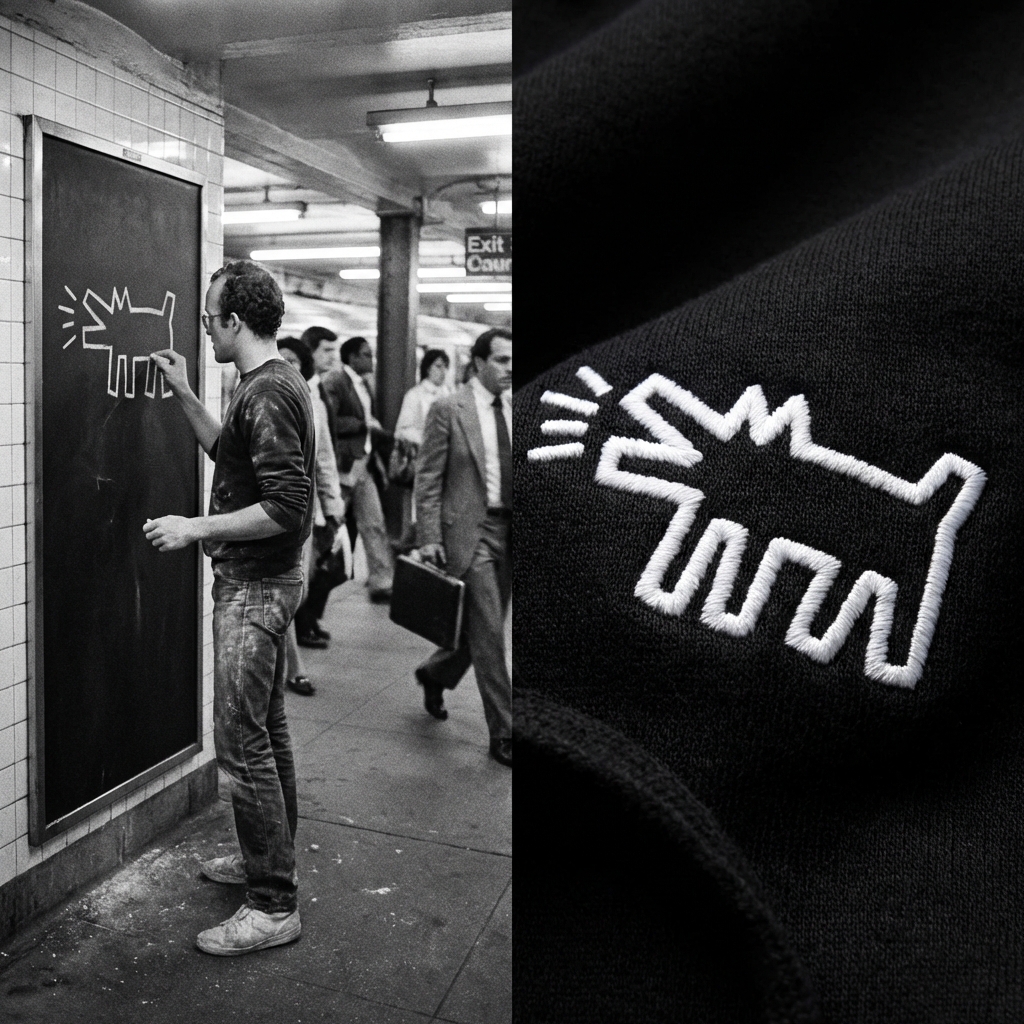
Between advertisements for dandruff shampoo and Broadway shows, there were blank, matte black panels waiting for new posters. For Keith Haring, these weren't empty spaces; they were canvases. Armed with white chalk and a frantic energy, he would draw his radiant babies, barking dogs, and dancing figures in a matter of seconds before jumping on the next train.

The art elite initially dismissed him. They called it graffiti; they called it vandalism. But Haring knew exactly what he was doing. He was bypassing the gatekeepers.

"The public has a right to art. Art is for everybody."

In 1986, Haring took this philosophy to its logical conclusion and did something that horrified the high-art world: he opened a store.

The Pop Shop on Lafayette Street in Soho wasn't a "gift shop" you exit through after seeing an exhibition. The shop was the exhibition. The floor was painted. The ceiling was painted. And on the shelves were t-shirts, badges, and posters that cost a few dollars.

Critics called it selling out. Haring called it accessibility. He wanted the kid from Queens to own the exact same imagery as the millionaire collector on the Upper East Side. The t-shirt was his vehicle for democratization.
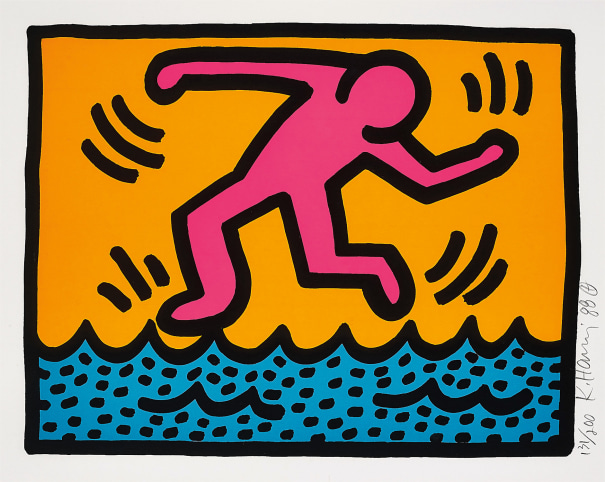
Keith Haring Pop Shop Interior 1986 The original Pop Shop interior, 1986.

When we began working on the Keith Haring collection at Reflect Studio, we felt the weight of this legacy. The challenge wasn't just reproducing an image; it was honoring the energy of his line.

A Keith Haring drawing looks deceptively simple, but his lines have a distinct weight and speed. To print them flat onto thin fabric felt wrong—it felt like a photocopy of a masterpiece.

We decided that the clothing needed to be the canvas. We selected heavyweight, sustainably sourced cotton that has significant structure—fabric that holds its shape.

Keith Haring Collection Detail Detail from the Keith Haring collection.

Instead of a standard screen print, we utilized high-density embroidery for the iconic figures. If you run your hand over the "Radiant Baby" on our hoodie, you feel a distinct ridge. It mimics the tactile thickness of the chalk he used in the subway stations. It gives the artwork dimension, lifting it off the chest.

Wearing these pieces today isn't just nostalgia for the 80s art scene. It is a continuation of Haring's original mission. It is taking the art out of the gallery, off the internet, and putting it back on the street where it belongs.

Shop the Collection